Mediterranean Diet for Brain Health: Why Researchers Keep Studying It
For decades, nutrition researchers have searched for dietary patterns that support healthy aging. While many eating plans come and go, one has consistently attracted scientific attention: the Mediterranean diet. Originally inspired by the traditional eating habits of countries bordering the Mediterranean Sea, this approach emphasizes vegetables, fruits, legumes, whole grains, fish, olive oil and nuts while limiting highly processed foods.
Today, the Mediterranean diet for brain health is one of the most extensively studied nutrition patterns in the world. Although researchers continue to learn more about its long-term effects, evidence suggests it may play an important role in supporting healthy cognitive aging when combined with other positive lifestyle habits.
Why Researchers Continue to Study It
One reason the Mediterranean diet has received so much attention is that it focuses on an overall pattern of eating rather than individual “superfoods.”
Large observational studies have found that people who closely follow Mediterranean-style eating patterns often experience better cardiovascular health, and because the brain depends on a healthy network of blood vessels to receive oxygen and nutrients, researchers have become increasingly interested in how these eating habits may also influence cognitive function. Several studies have associated greater adherence to a Mediterranean-style diet with slower cognitive decline and a lower risk of developing dementia, although researchers emphasize that no diet can completely eliminate that risk.
What Makes This Eating Pattern Different?
Unlike restrictive diets that eliminate entire food groups, the Mediterranean diet encourages variety and balance.
Meals typically include colorful vegetables, beans, lentils, whole grains and healthy fats such as extra virgin olive oil. Fish is eaten regularly, while red meat is enjoyed in moderation. Herbs and spices provide flavor in place of excessive salt, and fresh fruit often replaces highly processed desserts.
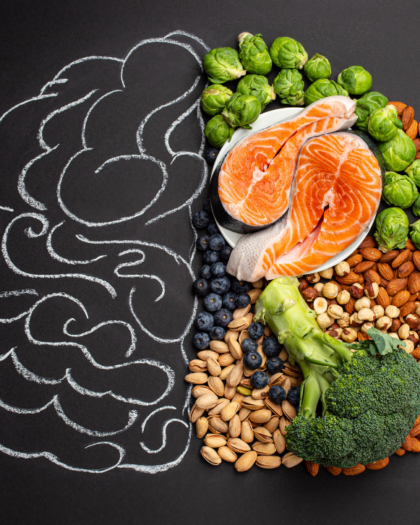
Many of these foods also appear on lists of brain-boosting foods because they contain nutrients linked with healthy brain function. Leafy greens provide folate and vitamin K, berries supply antioxidants, while oily fish contribute omega-3 fatty acids that are important for normal brain structure and communication between nerve cells.
Brain Health Is About More Than Food
Nutrition is only one piece of the puzzle. Researchers increasingly recognize that physical activity, quality sleep, social engagement, lifelong learning and the management of conditions such as high blood pressure and diabetes all contribute to healthy cognitive aging. In other words, the relationship between food and the brain is strongest when healthy eating becomes part of a broader lifestyle approach.
This combination of nutrition and healthy living continues to shape many of today’s most promising areas of brain-health research.
Putting Research into Practice
Scientific studies can tell us which eating patterns appear to support long-term health, but putting those findings into practice is another challenge altogether.
If you’re looking for practical ways to apply this research in your own kitchen, The Five Finger Plan to a Healthy Brain offers recipes, meal-planning ideas and evidence-based lifestyle strategies inspired by the internationally recognized FINGER® study. It’s an approachable guide for anyone interested in supporting lifelong brain health through everyday habits.